SNUG at Enlit Europe 2026: Why the Clean Energy Transition Starts with the Built Environment
Energy transition discussions frequently focus on clean generation, grid flexibility, storage, and electrification. Yet Europe cannot reach climate neutrality by 2050 without confronting the demand side of the equation: buildings account for roughly 40% of the EU’s total energy consumption and 36% of its greenhouse gas emissions.
At Enlit Europe 2026 in Vienna, the SNUG project brought the built environment squarely into the energy dialogue.
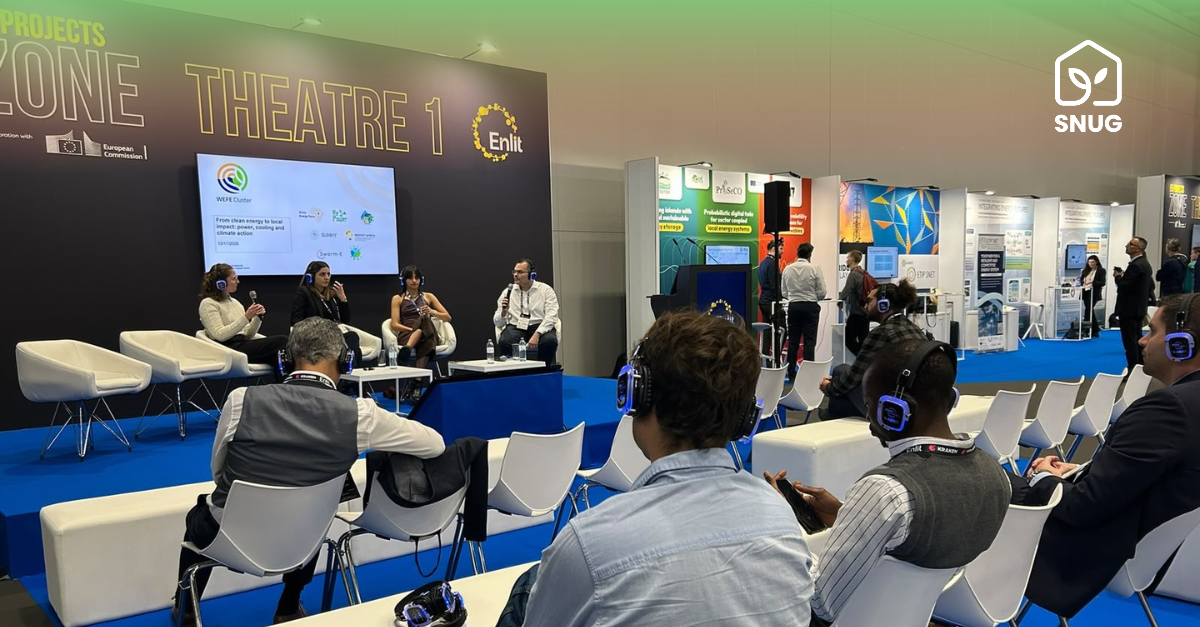
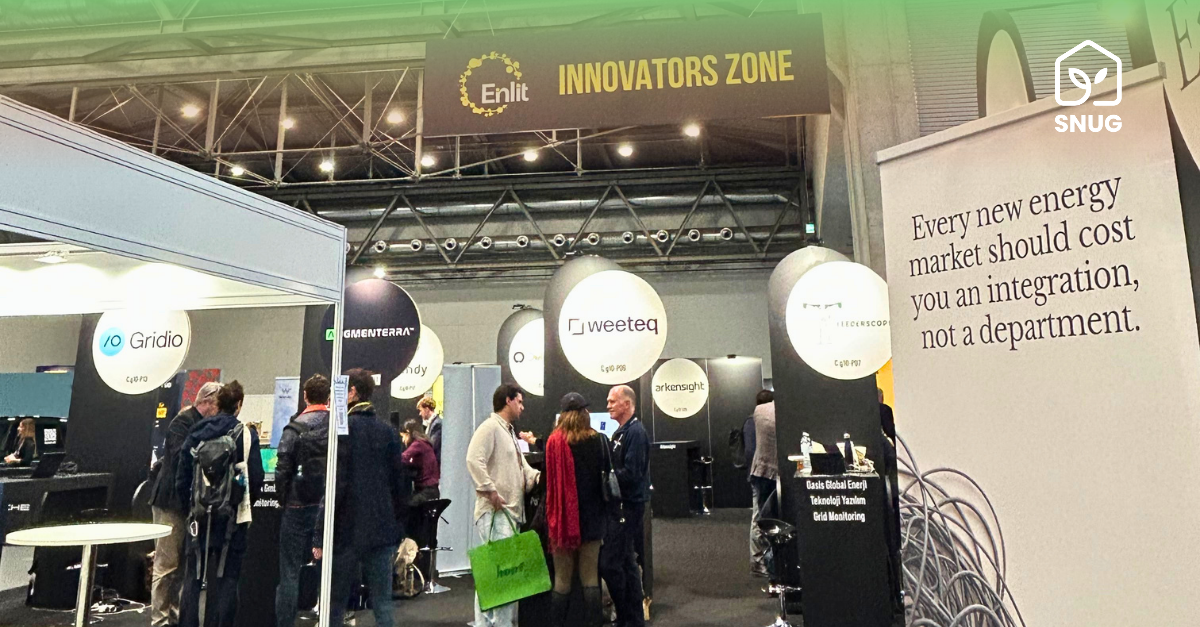
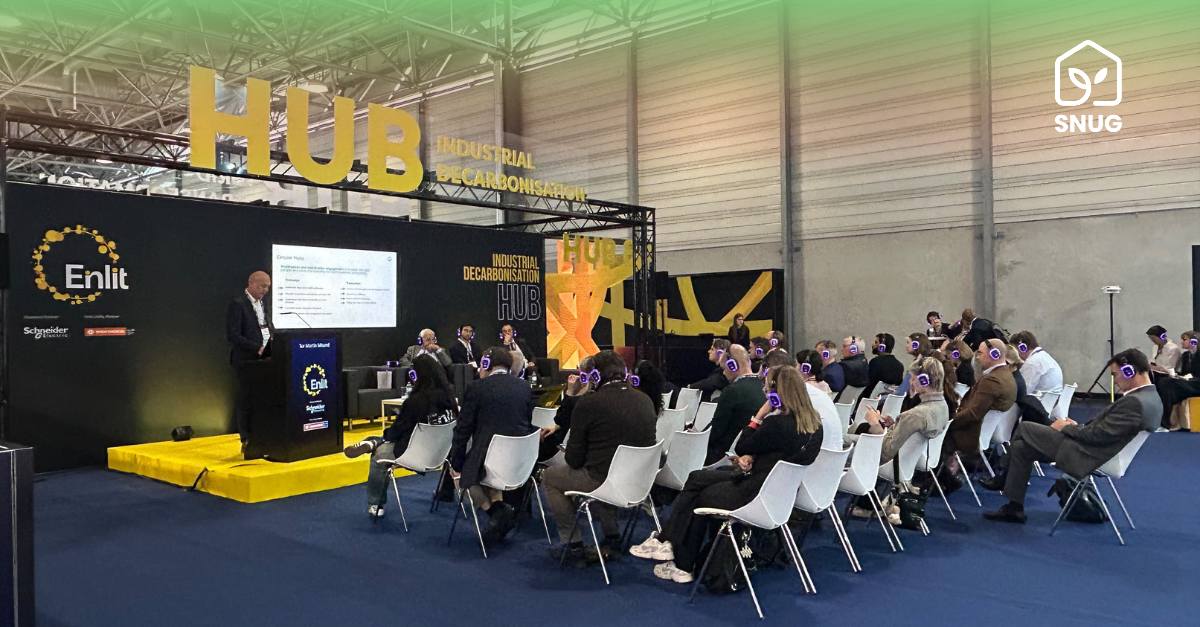
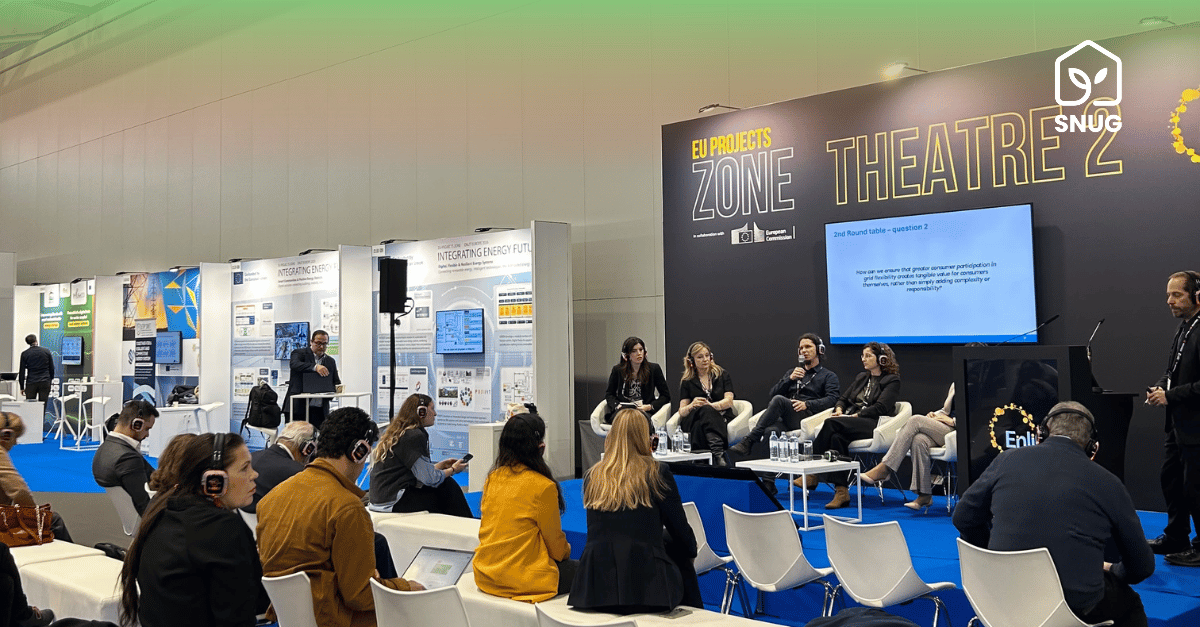
Representing the project on-site, our colleague Raquel Amaral connected with energy leaders, researchers, and policymakers to showcase how SNUG is reshaping the construction sector through circular economy principles, lightweight low-carbon materials, and cost-optimal deep renovation methodologies.
Bridging the Energy Transition: Why Buildings Took Center Stage
Enlit Europe brought together every segment of the energy value chain – from grid operators and utilities to tech pioneers and digital innovators. As decentralized energy systems expand, buildings are no longer passive end-users; they are dynamic energy hubs that determine grid stability and overall demand.
Throughout the event, the SNUG Horizon Europe project highlighted its integrated approach to addressing this transformation at the source:
- Accelerating Zero-Emission Buildings (ZEBs): Developing and validating high-performance, cost-effective insulation materials – including bio-based hemp panels, aerogel-based plasters, and phase-change material (PCM) mortars – that drastically reduce space heating and cooling demand.
- Closing the Circular Loop: Minimizing embodied emissions by prioritizing renewable, recycled, and recyclable building components, preventing raw material depletion, and diverting construction waste from landfills.
- Data-Driven & AI-Assisted Renovation: Equipping architects, engineers, and building owners with decision-support digital tools that optimize energy performance, lifecycle costs, and occupant comfort from day one.
Stronger Together: F6S Innovation & the Energy Efficiency Cohort
Moving from isolated pilot studies to market-scale adoption requires cross-sector collaboration across European research initiatives. At Enlit Europe, SNUG was featured alongside an ambitious roster of forward-thinking EU projects within the Energy Efficiency group hosted by F6S Innovation.
Together, this ecosystem bridged clean hydrogen, renewable energies, energy harvesting, industrial decarbonisation, energy storage and batteries, buildings, smart grids, and next-generation connectivity:
By aligning material efficiency with digital energy management and smart grid integration, the cohort highlighted how integrated EU innovation is accelerating the energy transition across Europe.
Looking Ahead
Enlit Europe 2026 provided an invaluable platform to share the SNUG methodology, discuss the future of sustainable architecture, and initiate dialogues for future pilots and cross-project synergies.
A warm thank you goes to everyone who visited the F6S Innovation stand, met with Raquel, and contributed to these discussions.
Explore our research milestones and pilot cases: here